Eco-Driving: The Real-World Guide to Reducing Your Carbon Footprint While Driving
I’ve spent years talking to drivers, watching ownership patterns, and analyzing data from real-world use, not laboratory tests. A persistent myth I encounter is that eco-driving is about sacrifice—a joyless, hyper-miling grind that saps the pleasure from driving. That’s a profound misunderstanding. In practice, eco-driving is about efficiency, intelligence, and often, a smoother, less stressful, and cheaper ownership experience. It’s not just for hybrid owners; the principles apply whether you’re in a decade-old sedan or a modern truck. Reducing your carbon footprint behind the wheel isn't a single grand gesture; it's a series of informed habits, and I’ve seen which ones actually move the needle.
The Foundation: Your Right Foot Is Your Most Powerful Tool
Let’s start with the undeniable truth I’ve observed in countless driving scenarios: aggressive driving is the single greatest waste of fuel and source of excess emissions in daily use. The calculus is brutally simple. Jackrabbit starts from stoplights, speeding, and late, hard braking convert expensive fuel into wasted heat and brake dust. The energy required to accelerate a vehicle scales dramatically with the urgency you demand.
The most effective eco-drivers I know practice “flow driving.” They anticipate traffic lights and slowing traffic half a block ahead. They ease off the accelerator earlier, often coasting to a gentle stop without ever touching the brake. They accelerate purposefully but smoothly, reaching cruising speed without ever flooring it. This isn’t slow driving; it’s smart driving. By maintaining momentum and avoiding the accelerate-brake cycle, I’ve watched drivers of conventional vehicles consistently improve their fuel economy by 15-25% in city traffic. The vehicle’s onboard computer isn’t lying—that’s real fuel, real money, and real carbon kept in the tank.
Master the Machine: Maintenance Is Non-Negotiable
You can have the gentlest right foot in the world, but a neglected vehicle will betray your efforts. This is where owner behavior splits into two distinct camps. The first sees maintenance as a reactive cost—a thing you do when a light comes on. The second, the efficient camp, treats it as fundamental system optimization.
The low-hanging fruit is tire pressure. Under-inflated tires are a constant drag, literally. I check dealer service logs and consistently see vehicles rolling in with pressures 5-10 PSI below spec. That’s enough to degrade fuel economy by a measurable 3-5%. It’s free, it takes five minutes a month, and it’s utterly foundational. Next is the ignored “Check Engine” light. That light is rarely about an immediate catastrophe; it’s often an oxygen sensor or emissions system fault. In practice, that fault means your engine’s computer has given up on optimizing the air-fuel mixture and has defaulted to a less efficient, “limp-home” mode. You are burning extra fuel and emitting more pollutants for every mile you delay that repair.
Then there’s the oil and the filters. Clean oil reduces internal friction. A clean air filter ensures the engine can breathe easily. These aren’t vague suggestions; they are direct mechanical inputs into the efficiency equation. A poorly tuned engine can easily waste 10% more fuel. Regular maintenance isn’t just about longevity; it’s the baseline for responsible, low-emission operation.
The Weight and Drag You Carry: An Unseen Tax
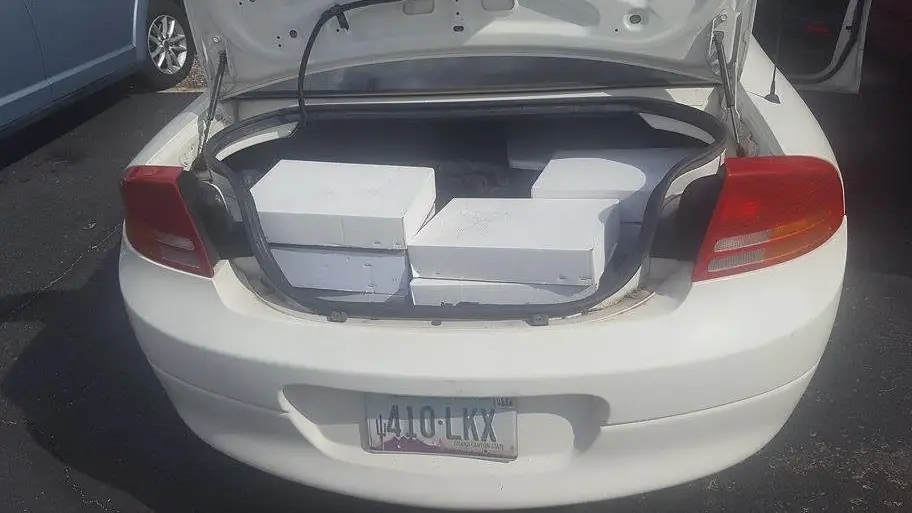
Here’s a habit I see in driveways everywhere: the vehicle as a rolling storage unit. Golf clubs, cases of water, bags of salt for a storm that passed months ago, a roof rack or cargo box left on year-round. Every single pound requires energy to accelerate. It’s physics. Clean out your trunk. Remove that massive roof rack when you’re not using it for a specific trip. I’ve tested this: a large, empty roof cargo box can reduce highway fuel economy by 5-10% due to aerodynamic drag alone. It’s like driving with a small parachute deployed.
Think of it as an efficiency tax you’re voluntarily paying for clutter. For every 100 pounds of unnecessary weight you remove, you can generally expect about a 1-2% improvement in fuel economy in a typical vehicle. It adds up. More critically, this mindset extends to trip planning. One longer, multi-purpose trip is almost always more efficient than several shorter, scattered trips with a cold engine. The most polluting phase of any drive is the first few miles when the engine and catalytic converter are cold and running rich.
The Modern Gearbox: Use It, Don’t Fight It
Transmission behavior is a major point of confusion. For automatic drivers, the best advice is simple: let it work. Modern automatics with 8, 9, or 10 speeds are programmed for efficiency. Stomping on the pedal forces a downshift and high RPMs. Smooth, moderate input allows the transmission to seek the highest gear possible for the situation. If your vehicle has an “Eco” mode, use it. I’ve found this mode doesn’t make the car sluggish; it recalibrates throttle response and shift points to prioritize efficiency. It’s like having a hypermiler copilot.
For manual transmission holdouts (a dwindling but passionate group), the rule is even simpler: shift early. You do not need to rev to 3,000 RPM before shifting. In most modern cars, you can shift up by 2,000 RPM or even lower under light throttle for city driving. The goal is to get into the highest feasible gear as soon as possible. Lugging the engine is bad, but so is incessantly revving it. Find the sweet spot where the engine is turning slowly but smoothly under light load.
The Idling Fallacy: Zero MPG Is the Worst MPG
This is a hill I will die on: modern engines do not need to “warm up” by idling for minutes. In fact, idling is the absolute least efficient state for an engine—it produces maximum emissions per unit of work done (which is zero). The engine warms up faster under light load. Start the car, ensure your visibility is clear, and drive gently for the first few minutes. That’s it.
The same logic applies to other idling scenarios. The “10-second rule” is a good one: if you’re stopped for more than 10 seconds (outside of traffic flow), it’s more efficient to turn the engine off and restart. Modern starters are designed for hundreds of thousands of cycles. I’ve watched parents sit in school pickup lines for 20 minutes, engine running, to power the radio and air conditioning. That’s a choice, but it’s an extraordinarily wasteful one. A block heater on a timer in extreme cold is a far more efficient way to reduce cold-start emissions and wear than idling for half an hour.
The Big Picture: Choosing Your Miles Wisely
The most effective eco-driving technique is sometimes to not drive at all. This isn’t anti-car rhetoric; it’s logistical intelligence. Before you automatically reach for the keys, ask: Is this trip necessary? Can it be combined with another errand later? Is walking, cycling, or public transit a viable alternative for this specific journey? For the weekly grocery run, could you carry more per trip?
Furthermore, technology now offers a powerful tool: real-time traffic navigation. Sitting in bumper-to-bumper traffic is an emissions nightmare. Using an app to avoid a major, stalled congestion event doesn’t just save you time; it can cut the emissions from that specific trip significantly by keeping the vehicle moving. Route planning for efficiency, not just the shortest distance, is a hallmark of a conscientious driver.
The Takeaway: Consistency Over Perfection
You don’t need to buy a new electric vehicle tomorrow to make a meaningful impact. The collective effect of millions of drivers adopting even a few of these habits would be transformative. Start with your driving style—smooth out your acceleration and braking. Get your tire pressure to spec and address that check engine light. Clean out the trunk. These are actionable, cost-neutral, or cost-saving steps you can take this week.
Eco-driving isn’t a purity test. It’s the recognition that the automobile is a tool, and like any tool, it can be used skillfully or wastefully. I’ve seen the data from drivers who make the shift. They save money, they reduce wear on their vehicles, and they contribute tangibly less to the problem. In the end, it’s about driving with purpose, not just with impulse. Your carbon footprint, your wallet, and your stress levels will thank you.