
The Fuel Reality Check: What Your Energy Choice Actually Costs the Planet
For two decades, I’ve watched the “fuel debate” cycle through phases of hysteria, dismissal, and profound confusion. A customer trades a perfectly good diesel for a gasoline truck because of a headline. A family leases an electric SUV believing they’ve erased their automotive footprint, unaware of the complex ledger behind their wall charger. The narrative is rarely clean, and the environmental math is almost never simple. It’s time to move beyond the slogans and examine the real, lived-in environmental impact of our fuel choices—from the well to the wheels, and everything in between.
The truth is, there is no universally “clean” fuel. There are only trade-offs: different kinds of extraction, different emission profiles, and different dependencies on infrastructure and geography. The most environmentally responsible choice is rarely about picking a winner from a brochure; it’s about understanding the full lifecycle context of your own driving life.
Gasoline: The Familiar Devil and Its Evolving Toll

Let’s start with the bedrock. Gasoline-powered internal combustion engines are the default against which all else is measured, and their environmental story is one of incremental improvement shadowed by colossal scale.
When we talk about gasoline’s impact, we must split the conversation: tailpipe emissions and everything upstream. The modern gasoline engine is a marvel of efficiency compared to its predecessors. Direct injection, turbocharging, and advanced emissions controls mean a 2020s sedan emits a fraction of the hydrocarbons, nitrogen oxides (NOx), and carbon monoxide (CO) that a car from the 1990s did. The catalytic converter is one of the most successful environmental technologies ever mandated.
But the elephant in the room remains carbon dioxide (CO₂). Combustion of a gallon of gasoline reliably produces about 20 pounds of CO₂. There’s no filter for that. This is the linear, inescapable climate cost of burning fossil carbon. In practice, I’ve seen drivers focus solely on MPG as a financial metric, but it is, first and foremost, a direct proxy for CO₂ output. A car that gets 40 MPG is halving the climate impact per mile of a car that gets 20 MPG.

The upstream impact—often called the “well-to-tank” energy—is substantial. Crude oil extraction is increasingly energy-intensive, involving deep-sea drilling, fracking, or tar sands recovery. The refining process itself is a major industrial polluter, releasing toxins and consuming vast amounts of energy and water. Then there’s transportation via pipelines, tankers, and trucks. By the time the fuel is in your tank, roughly 15-25% of its total lifecycle energy budget and associated emissions have already been spent. We don’t see this at the pump, but the planet feels it.
Diesel: The Tale of Two Emissions
Diesel’s story is a masterclass in how public perception can pivot on a single pollutant. For years, diesel was touted (especially in Europe) as the climate-conscious choice. Its engines are inherently more thermally efficient, yielding better fuel economy and thus lower CO₂ emissions per mile—typically 15-30% lower than an equivalent gasoline engine. For high-mileage drivers, this was a tangible, calculable benefit.
However, diesel’s fatal flaw was always about local air quality, not global climate. Diesel combustion produces significant particulate matter (PM)—soot—and nitrogen oxides (NOx). These are not greenhouse gases; they are poisons that degrade human health, causing respiratory and cardiovascular disease. The “Dieselgate” scandal wasn’t about CO₂; it was about the deliberate falsification of NOx emissions tests, flooding cities with unseen pollution.

The technology to clean this up exists—advanced particulate filters and selective catalytic reduction (SCR) systems that use diesel exhaust fluid (DEF). Modern, properly maintained diesel trucks and cars are vastly cleaner than their predecessors. But the trust is broken. In my observation, the residual environmental case for diesel is now incredibly narrow: almost exclusively for people who drive very high annual mileages, mostly on highways, where the efficiency advantage can offset the higher upfront energy cost of refining diesel and the manufacturing of complex after-treatment systems. For the average urban commuter, it’s a poor choice.
The Hybrid Bridge: Real-World Efficiency vs. Theoretical Purity
Hybrids are often dismissed as a transitional technology. But from an environmental standpoint, transition is the point—and it’s a transition that delivers tangible, immediate reductions without requiring behavioral change or new infrastructure.

The environmental genius of a hybrid like the Toyota Prius isn’t just that it uses a battery. It’s that it allows a small, Atkinson-cycle gasoline engine to operate almost exclusively in its most efficient rpm band. The battery and motor handle acceleration and low-speed crawling, while the engine shuts off at stops. The result is a drastic reduction in fuel burned in inefficient, high-emission conditions: cold starts, low-speed traffic, and idle.
I’ve seen the data from real-world owners. While EPA ratings are one thing, the consistent story is that hybrids deliver on their promise, especially in mixed and urban driving. They cut gasoline consumption—and thus CO₂ and all other emissions—by 30-40% compared to a conventional counterpart. There’s no range anxiety, no home charger installation, and the lifecycle battery impact is small (a 1-2 kWh pack versus 50-100 kWh in an EV).
The plug-in hybrid (PHEV) adds another layer. For owners with predictable, short daily commutes and home charging access, a PHEV can operate as an EV 80% of the time, using gasoline only for longer trips. This is, in practice, the optimal solution for many two-car households: one long-range EV and one PHEV. The problem I’ve observed is that many PHEVs are sold without the charging cord ever being plugged in, becoming heavy, inefficient regular hybrids. The environmental benefit is entirely dependent on user behavior.
Electric Vehicles: The Clean Tailpipe and the Dirty Grid

This is where the conversation gets contentious, and where simplistic “zero emissions” marketing does a disservice to a genuinely transformative technology.
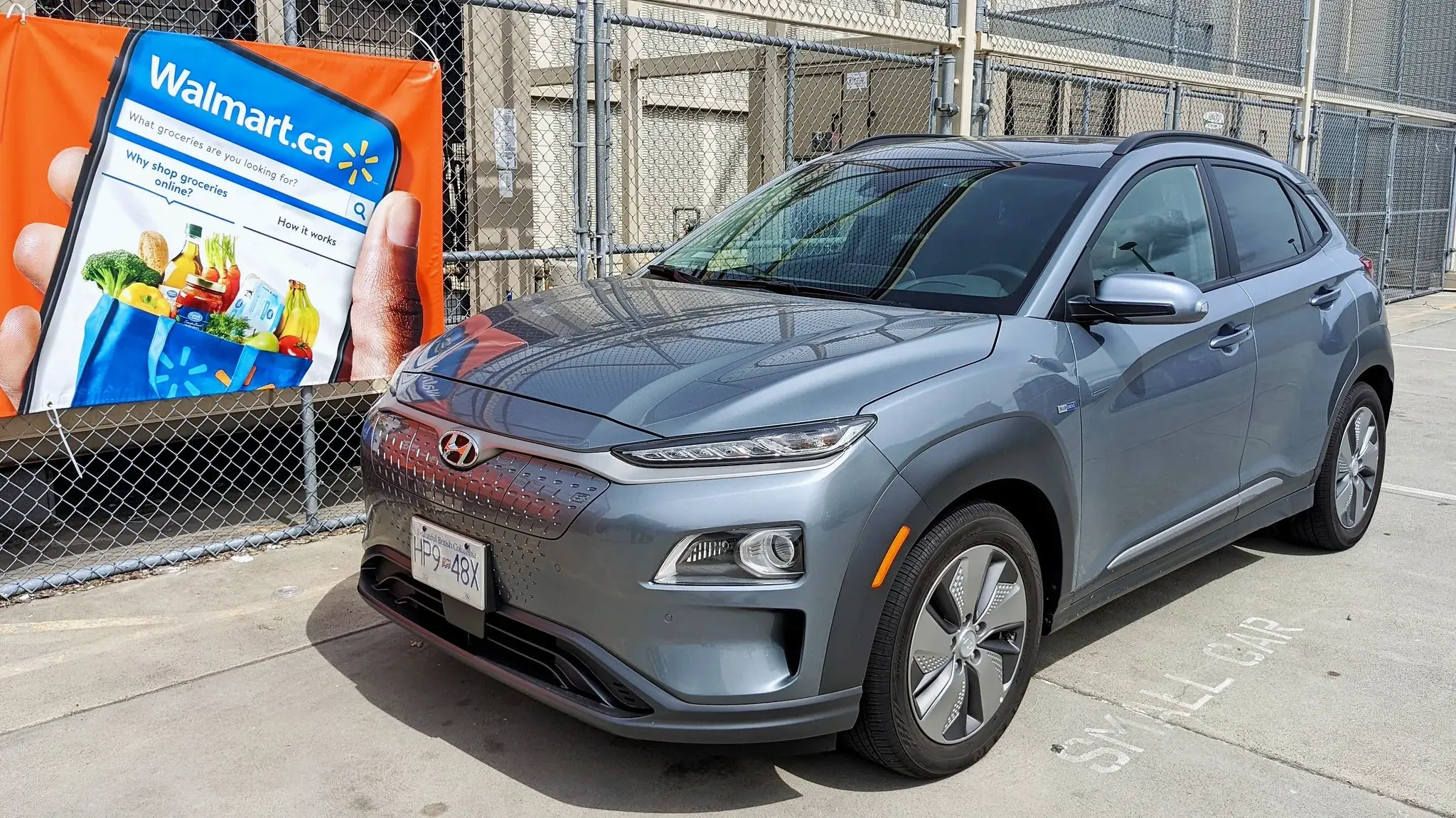
The single greatest environmental benefit of a Battery Electric Vehicle (BEV) is unambiguous: it has no tailpipe. It eliminates all point-source emissions from the vehicle itself. This means no CO₂, NOx, PM, or CO is released in your neighborhood, on your school run, or in city centers. The local air quality improvement is immediate and profound.
However, to declare an EV “emission-free” is to engage in geographic and accounting fraud. The electricity must come from somewhere. An EV charged on a grid powered primarily by coal is responsible for significant CO₂ emissions—potentially comparable to a very efficient hybrid. An EV charged on a grid rich in hydro, nuclear, wind, or solar has a minuscule operational footprint.

The other critical factor is the battery. Manufacturing a large lithium-ion battery pack is an energy- and resource-intensive process. It involves mining for lithium, cobalt, nickel, and graphite, with attendant ecological damage and human rights concerns. The current manufacturing emissions for a long-range EV are higher than for a conventional car. This creates a “carbon debt” that must be paid back through clean driving.
This is where the lifecycle analysis becomes crucial. Based on the average U.S. grid mix, an EV breaks even on total lifecycle CO₂ emissions with an efficient gasoline car after about 15,000-20,000 miles of driving. On a cleaner grid, that payback happens much sooner. Over a 150,000-mile life, the EV’s total climate impact is significantly lower. As grids decarbonize, every existing EV gets cleaner, a benefit no gasoline car can ever realize.
The real-world pattern I see is that the environmental payoff is maximized when an EV is driven for many years and charged intelligently (overnight, when grid demand and carbon intensity are often lower). It is diminished if the vehicle is treated as a disposable tech item and traded every two years.
Alternative Fuels & The Niche Players: Hydrogen, Biofuels, and E-Fuels

Beyond the mainstream, alternatives promise different paths.
Hydrogen Fuel Cells are, in essence, electric vehicles that generate their own electricity on board via a chemical reaction between hydrogen and oxygen, emitting only water vapor. The promise is immense: quick refueling and long range. The problem is upstream. Today, 95% of hydrogen is “gray,” produced from natural gas in a process that releases CO₂. “Green” hydrogen, made via electrolysis using renewable electricity, is promising but wildly inefficient and expensive. You lose about 70% of the original renewable energy in the conversion, transport, and fuel cell process. For now, it’s a solution for specific use cases (like long-haul trucking on fixed routes) but not for passenger cars.
Biofuels (like ethanol and biodiesel) recycle atmospheric carbon. Plants absorb CO₂ as they grow, which is released when the fuel is burned, creating a theoretical closed loop. The reality is more complex. Growing the crops requires land, water, fertilizers, and diesel-powered farm equipment. The “land-use change” impact—clearing forests for farmland—can be catastrophic, wiping out any carbon benefit. First-generation biofuels from food crops (corn ethanol) have dubious environmental value. Advanced biofuels from waste products (agricultural residue, used cooking oil) are better but supply-limited.

Synthetic E-Fuels are the current darling of the legacy auto industry. They are laboratory-crafted hydrocarbons, made using CO₂ captured from the air and hydrogen from green electricity. They can run in existing engines. The catch? The process is staggeringly energy-inefficient. You might use five times the renewable electricity to power a car via e-fuels versus charging a BEV directly. In a world of limited renewable energy, this is a profligate use of a precious resource. Their future, if any, is in aviation and classic car preservation, not mass mobility.
The Verdict: It’s About Context, Not Dogma
After watching this landscape evolve, here is my informed conclusion: there is no single “best” fuel for the environment. There is only the most appropriate fuel for a specific context.
- For the dense urban driver: A pure EV, charged from the cleanest available grid option, provides the greatest combined benefit for climate and immediate human health.
- For the high-mileage highway driver: A modern, efficient diesel or a hybrid might still offer the lowest total lifecycle CO₂, especially if their regional grid is heavily fossil-fuel dependent.
- For the one-car household with unpredictable needs: A hybrid or a plug-in hybrid (if you’ll actually plug it in) offers remarkable real-world reduction with no compromise.
- For the driver who keeps cars for 15 years: The manufacturing emissions become a small part of the total story. A high-MPG gasoline car, an EV, or a hybrid will all far outpace a gas-guzzler.
The most powerful lever for reducing environmental impact isn’t found on a fuel pump; it’s found in your right foot and your ownership habits. No matter what you drive, driving less, combining trips, maintaining proper tire pressure, and avoiding aggressive acceleration and braking will slash your emissions profile more dramatically than any debate between fuel types. After that, choose the most efficient vehicle that truly fits your life, and plan to drive it for a long, long time. The greenest car, in the end, is often the one that already exists.