The Unseen Mechanic: How Your Driving Habits Dictate Your Car’s Lifespan
Forget the oil change sticker on your windshield for a moment. The single most powerful force determining your vehicle's health, its repair bills, and its ultimate lifespan isn't in your mechanic's bay. It's in your driver's seat. I've watched identical models, rolling off the same assembly line, end up in wildly different states a decade later. One is a rattling money pit, its owner resigned to a cycle of breakdowns. The other is still smooth, quiet, and reliable. The difference almost never boils down to luck or brand loyalty. It's behavior.
Maintenance is reactive. It’s what you do to the car. Your driving habits are proactive; they are the physical reality your car must endure every single day. Treat them as separate concerns, and you’ll forever be chasing problems. Understand that they are inseparable, and you gain the power to dramatically alter your vehicle's destiny.
The Tyranny of the Short Trip: A Cold Engine’s Worst Enemy
If I had to identify the single most destructive common driving habit, it’s the perpetual short trip. This is the silent killer, the habit that masquerades as gentle use. An owner thinks, "I just drive two miles to the train station and back; I'm barely using the car." In reality, they are subjecting it to maximum wear with minimal benefit.
Here’s what I see happening under the hood. An engine's greatest period of wear is during warm-up. Cold oil is thick and sluggish, taking critical seconds to fully circulate. Metal components, designed to operate with precise clearances at temperature, are tight and abrasive against each other. Fuel combustion creates water vapor and acids that condense inside the crankcase. On a proper drive, the engine eventually gets hot enough to boil off that corrosive condensate. On a two-mile trip, it never does. That acidic soup dilutes the oil and coats internal parts, accelerating corrosion.
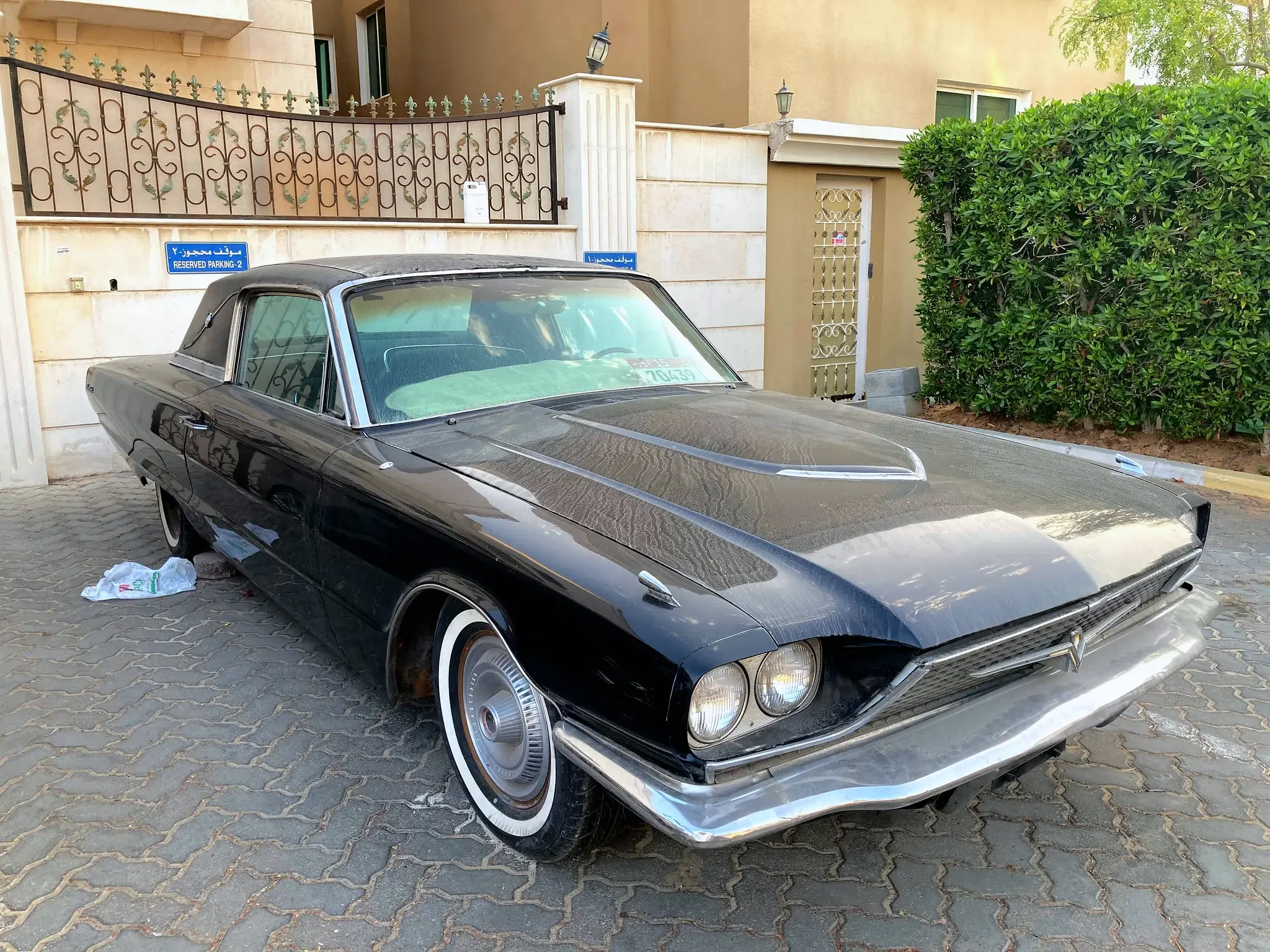
Furthermore, the catalytic converter never reaches its optimal operating temperature. It remains clogged with unburned hydrocarbons, leading to premature failure—a repair that costs thousands. The battery never gets a full recharge from the alternator, leading to a slow, sulfating death. In practice, a car used exclusively for short trips will often need a new battery, brakes (from constant low-speed use), and exhaust components long before its odometer would suggest, all while suffering from internal engine wear that won’t reveal itself until a major failure occurs.
The Physics of Aggression: More Than Just Brake Pads
We all know aggressive driving is bad. But most owners drastically underestimate the scope of the damage. It’s not just about wearing out brake pads 20% faster. It’s about applying violent, unplanned forces to every single stressed component in the drivetrain and chassis.
Jackrabbit starts don't just burn fuel. They shock-load the entire power delivery system: engine mounts stretch and tear, transmission bands and clutches slam into engagement, differential gears take a sudden hit of torque. I’ve seen transmissions fail not from mileage, but from a cumulative history of being hurriedly shifted from Park to Drive while the engine is still revving. Hard, last-minute braking does more than glaze rotors. It transfers immense heat into the brake fluid, boiling it over time and leading to a spongy pedal. It wears suspension bushings and ball joints prematurely as the car’s weight dives forward with unnatural force.
Conversely, the habit of smoothness is a form of preventative maintenance. A driver who accelerates with purpose, not panic, and who reads traffic flow to brake early and gently, isn’t just saving fuel. They are giving every joint, seal, and mounting point a predictable, manageable workload. The difference in component lifespan isn’t marginal; it can be the difference between a component lasting 80,000 miles and 150,000 miles.
The High Cost of "It Feels Fine": Ignoring the Subtle Cues
This is where habit meets negligence. Cars communicate. A change in sound, feel, or behavior is a direct signal. The habit of ignoring these signals—of driving until a clear, catastrophic failure occurs—is a primary reason for cascading repairs.
Let me give you a classic, real-world sequence I’ve observed dozens of times. A wheel bearing begins to emit a low hum. It’s ignored. The driver gets used to the sound. The bearing, now running without proper lubrication and with increasing friction, begins to overheat. This heat transfers into the wheel hub and even the brake caliper. Eventually, the bearing seizes. Now, instead of a $300 bearing replacement, the owner needs a new hub assembly, a rotor warped by heat, and possibly a compromised brake caliper—a repair bill three or four times larger.
The same logic applies to a slight misfire that’s ignored (ruining the catalytic converter), a small coolant leak that’s topped off but not fixed (leading to overheating and head gasket failure), or a dragging brake caliper (destroying the pad, rotor, and boiling the fluid). The driving habit of "I'll deal with it later" directly multiplies the cost and complexity of the eventual repair.
The Myth of "Easy" Highway Miles vs. "Hard" City Miles
This common wisdom holds a kernel of truth but is dangerously oversimplified. Yes, sustained highway driving is generally easier on a car than stop-and-go city traffic. The engine operates at a stable temperature and load, brakes are used minimally, and components experience fewer thermal cycles.
However, the driving habits within those environments matter more than the environment itself. A serene, steady 65-mph cruise on the interstate is mechanical nirvana. But the driver who habitually cruises at 85 mph is creating a different reality. At that speed, aerodynamic drag forces the engine to work much harder. Everything spins faster: the alternator, water pump, transmission, and wheel bearings. Tire wear increases exponentially with heat and speed. A single high-speed impact with a pothole can bend a rim or blow out a sidewall, an event far less likely at city speeds.
Conversely, a mindful driver in the city can mitigate much of the strain. The key habit is anticipation. Coasting to a red light rather than accelerating up to it and braking saves the entire drivetrain and brake system. Gentle acceleration from a stop prevents shock loads. This driver’s "hard city miles" may be far less damaging than the aggressive highway driver’s "easy miles."
The Proactive Habits: Driving as Preventative Maintenance
So what does constructive driving look like? It’s a conscious practice.
The Ritual of the Warm-Up: Don’t idle a cold engine for ten minutes. That’s wasteful and doesn’t help. The correct habit is to start the car, ensure it’s running smoothly (about 30 seconds), then drive gently for the first 5-10 minutes. Avoid high RPMs and full throttle until the temperature gauge is normalized. This gets fluids circulating and heat into the system far more efficiently than idling.

The Full-Cycle Charge: Make it a non-negotiable habit to take your car on a 20-30 minute continuous drive at highway speeds at least once every week or two, especially if it’s primarily used for short trips. This burns off condensation, fully charges the battery, and lets the exhaust system clean itself out. Think of it as essential exercise.
Listen and Feel: Cultivate the habit of driving in silence—no radio occasionally. Listen for new sounds. Pay attention to the feel of the steering, the responsiveness of the brakes, the smoothness of gear changes. Your senses are the best diagnostic tool you own.
Plan for the Terrain: The habit of mindlessly pounding over speed bumps or driveway lips destroys suspension components. Slow down, take them at an angle if possible. If you have a performance or low-profile-tire car, the habit of actively scanning for potholes is not being fussy; it’s protecting a fragile and expensive part of the car.
In the end, your car is a mechanical system obeying immutable laws of physics. Your driving habits are the inputs into that system. Harsh inputs create harsh outcomes. Smooth, mindful inputs promote longevity. You can’t avoid all repairs, but you absolutely can determine their frequency, severity, and cost. The maintenance schedule in your manual is the minimum. How you drive writes the rest of the story. Choose your habits wisely; they are the unseen mechanic, working on your car every single mile.